
Why community matters when you're building a wellness practice
Building a business is its own kind of lonely - even when you have a business partner.
Paul and I work together every day. We're aligned on the vision and the work. But there's a particular kind of isolation that comes from existing between two worlds. The people closest to us work in tech and corporate companies. They're used to the 9-5, so don’t understand it when we say “we’re too busy building” instead of going out. They’re supportive, but we start to lose them when we say what we're building sits at the intersection of technology and real human experiences. We get positive nods or replies of “that’s cool”, but within seconds, the eyes start to glaze over.
And we haven’t even gotten to the latest things we’ve designed, developed and shipped.
Some weeks, we're at startup events talking unit economics with investors. The next morning, we're in a breathwork circle or having coffee with a sound healer we met through Instagram. It's two extremes. And sometimes it doesn’t feel like we quite belong to either.
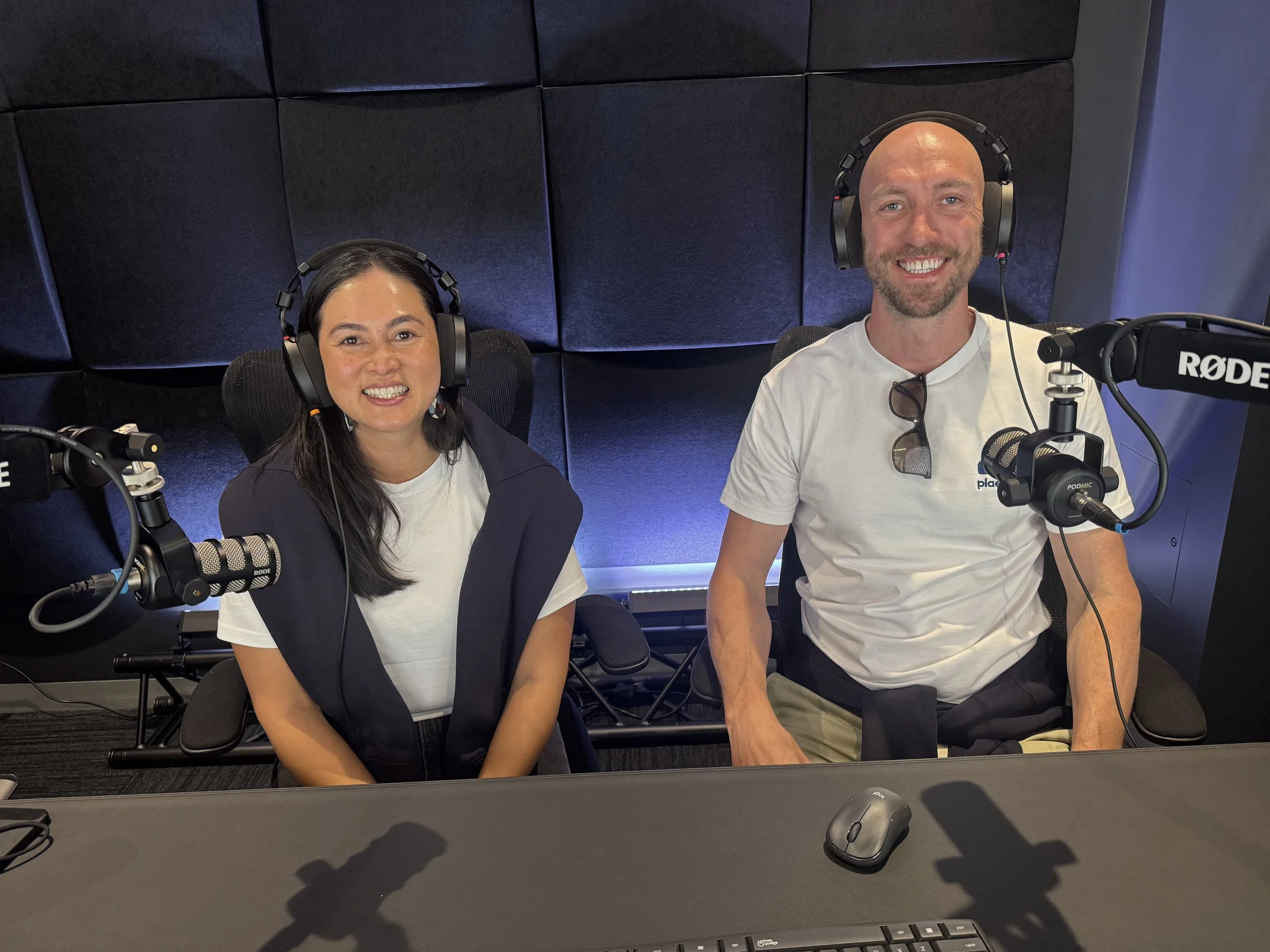
In fact, we’ve felt out of place long before this. And even named our podcast, Out of Plaece.
Side note: We wish this was our studio.
What do wellness practitioners actually need beyond clients?
As we've delved deeper into the wellness space, we've met coaches and practitioners across multiple modalities, including shadow work, nutrition, movement, energy work, sound healing, and breathwork. Most found their way to this work through their own healing journey and built their practice from there. Much like us building Plaece.
Over chai teas and smoothies (not to stereotype, but we do love a good brunch), we kept hearing: people spend their days holding space for others, both in person and online, and then go home to handle the business side alone. No one to debrief with. No peer group that truly gets it.
This is particularly true if you’ve gone through a healing journey, which in itself can be a lonely endeavour, and then started to build a business that’s outside of the traditional norms.
Based on our research, it’s one of the most common experiences in the wellness industry.
So, how does community support the growth of a wellness business?
Community gives practitioners something that content and coaching alone can't - a sense of shared experience at every stage of the journey.
With our founding members, we’ve started a regular virtual call. Not as product feedback sessions, though that happens naturally, but more as a space to share what's working, where they're stuck, and what building actually feels like.
We have people just starting out alongside coaches and facilitators who've been doing this full-time for years with a steady client base. Experience meets fresh eyes, and everyone has something to offer and something to learn.
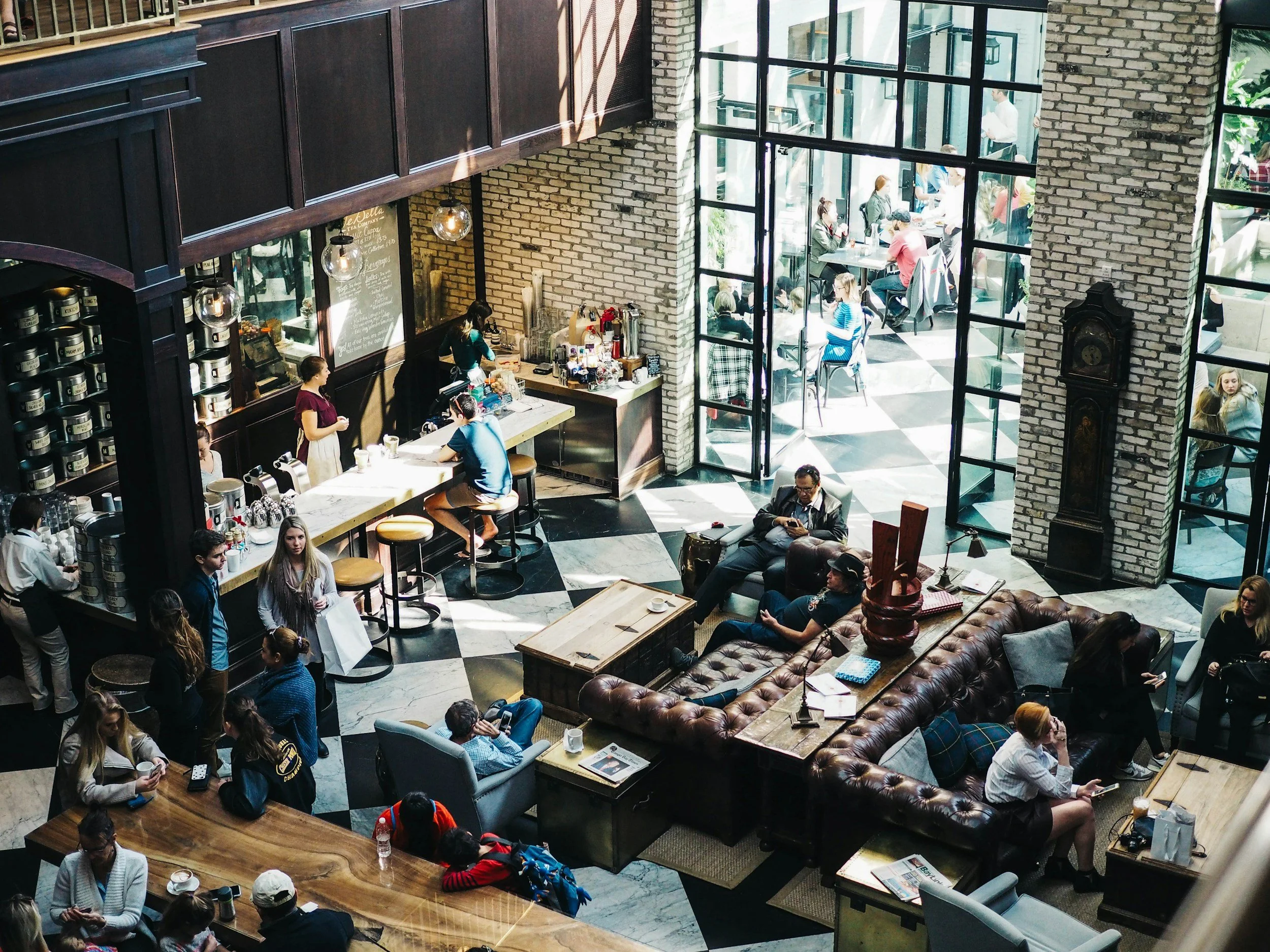
We believe community is built through participation.
That’s why we built community into the platform from the start.
Community isn't an add-on to wellness, even when it feels tacked on. It's where much of the real work happens: between sessions, between programs, and in the moments when someone needs to know they're not alone on the path.
That's true for clients. And it's just as true for the practitioners, facilitators and coaches guiding them.
We built community into Plaece to help our clients build their communities. But since then, we’ve built in-person and virtual ones because we needed them ourselves. And because the people we work with told us, clearly and consistently, that they did too.
We have an in-person meetup in Melbourne coming up soon on Sunday, 29 March at 11am. It’ll be somewhere around Balaclava or Windsor in Melbourne. One where coaches can simply turn up. No yoga mats required. No breathwork or morning dip. Just people hanging out, sharing stories and chatting about the things they’re passionate about. Join if you’re available by grabbing a seat here.
If you're building a practice in the holistic or wellness space and you'd like to be part of what we're creating, we'd love to have you in the room.
- Ann