The feast-or-famine cycle is not a mindset problem. It’s a systems problem.
Over the past four months, I have met with practitioners across Melbourne, including breathwork facilitators, sound healers, energy workers, and mental health advocates. Each is engaged in essential, often unrecognised work.
Our focus was not on selling, but on listening.
In every conversation, regardless of experience or schedule, the same theme emerged: the work is sustainable, but the business is not.
Everyone came into holistic and wellness work through their own healing.
This is not a coincidence; it reflects the nature of this work. When a practice such as breathwork, sound healing, or somatic therapy creates a profound shift, practitioners feel compelled to share it.
I know this from personal experience. As a trauma-informed breathwork coach, I practice breathwork every morning—not because I am told to, but because I have witnessed its impact on myself and my clients (when I was coaching).
However, few discuss the realities of daily life when building a business in this space.
Daily work involves finding clients, building a social presence, determining pricing, selecting platforms, and learning to market oneself. I am still adapting to social media, and I believe many practitioners share this experience, though few discuss it openly. So, how do you get found if you don’t do social media?
Posting online still makes me cringe and doesn’t feel natural
The thing nobody is solving
Among all the challenges discussed, one stood out as the most persistent and difficult.
Lead generation, particularly the lack of a consistent, reliable method, remains a significant issue.
This is not due to a lack of skill or the quality of their work. The challenge lies in the many gaps between discovery and conversion, with too many drop-offs and an overreliance on ever-changing algorithms. My co-founder, Ann, is in marketing, and even she finds it perplexing.
The feast-or-famine cycle is real: a busy month followed by a quiet one, frequent posting leading to burnout, and positive testimonials without referrals. This is exhausting, but it is not due to practitioner error.
The underlying issue is the absence of effective systems or ones that actually align with how people want to run their businesses.
Online and in-person: the gap nobody has bridged
Another recurring theme is the tension between online presence and in-person connection. Melbourne’s wellness community is close-knit, with practitioners found through word of mouth and shared spaces. However, maintaining that sense of connection when not physically present remains a challenge.
And then there’s the content problem.
Currently, much online content appears generic and tailored for algorithms. Practitioners doing the most meaningful work are often less visible online, not due to a lack of insight, but because they choose authenticity over conformity.
Ironically, their unique voices and stories could stand out, as they are authentic and not generated by templates or AI. Holistic wellness is still a deeply human-to-human experience, and I hope that it stays this way.
I’ve been a client in this space for a long time, especially following a deeply traumatic personal experience. Ann, my co-founder, and I also went through a serious motor vehicle accident together in 2024. The recovery process exposed us to more modalities, practitioners, and programs.
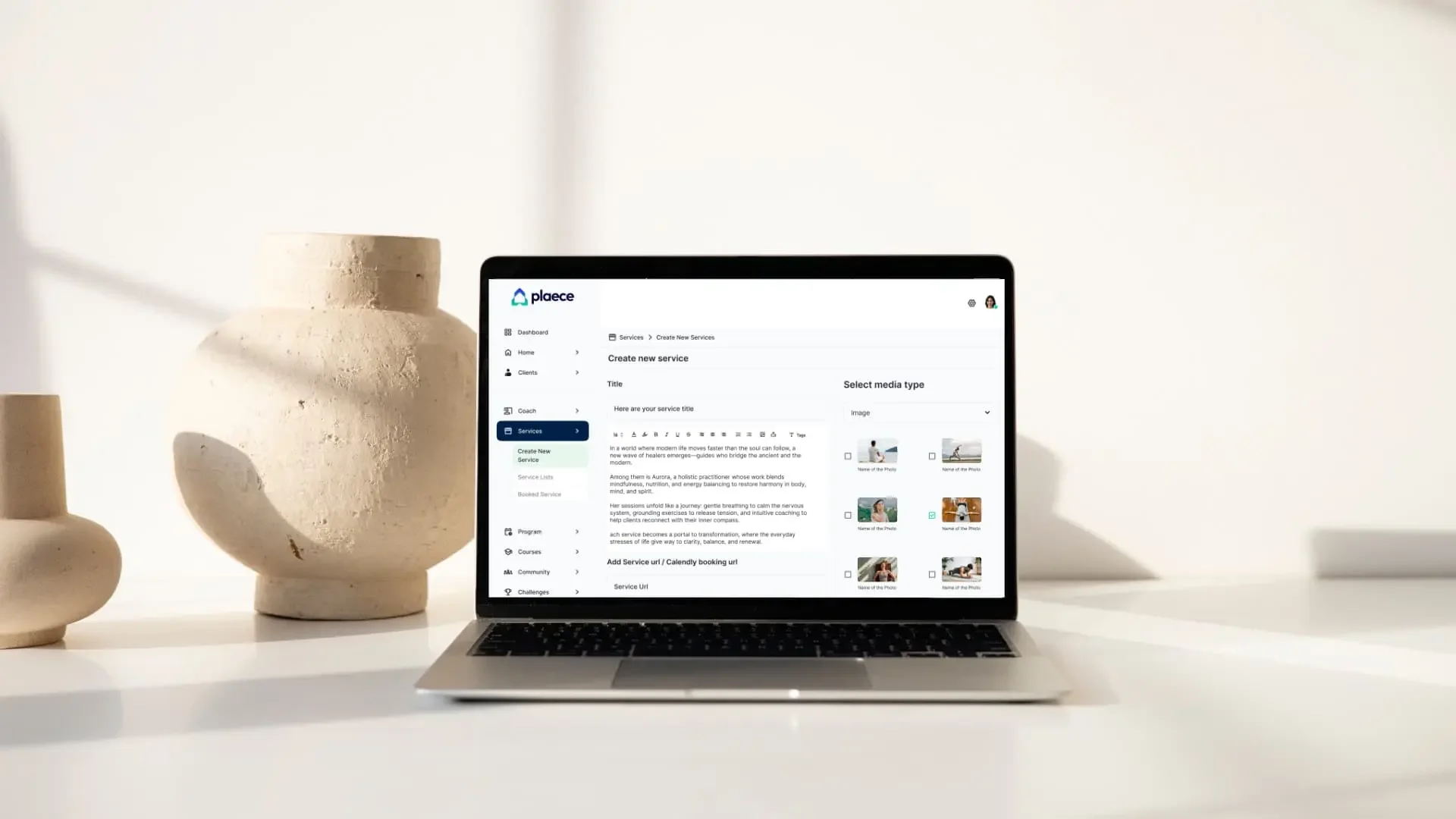
As a client, I wanted a clear path, actionable steps, the freedom to progress at my own pace, and supportive people alongside me. I did not want another email to search for, another Google Drive folder, or another app to forget after a few weeks. Simplicity was the key, along with a sense that my experience mattered, not just content delivery. That’s what I tried to build when I started working with my own clients and what we’ve been building into Plaece.
We don’t have all the answers yet.
We have practical ideas for addressing the lead generation problem, informed by both our experiences and the feedback we have received. We can’t say what yet, and this is where you come in.
Because ideas without validation are just opinions.
We will continue speaking with practitioners, asking questions, and carefully considering responses before building something new. If you are a breathwork facilitator, sound healer, energy practitioner, yoga teacher, or somatic coach and this resonates with you, please reach out to connect.
This is not a sales pitch; it is a genuine invitation to connect, share your perspective, and help shape the next steps.
We especially welcome voices willing to challenge us, question assumptions, and expand our thinking.
To share your experience or insights, please book a conversation with Ann and me using this calendar link. We value hearing from practitioners who are willing to challenge or expand our perspective.
— Paul
FAQS. What we actually get asked
-
Most practitioners came into their work through a personal healing journey, not a business background. The skills that make them exceptional in a session don't map directly onto lead generation, marketing, or platform strategy. Without systems that work consistently, income tends to spike when a practitioner is actively promoting and dip when they're focused on delivery.
This challenge is consistent for small business owners across different industries.
-
The most effective approach combines a clear entry point — a free challenge, a short program, or a community space — with an online presence that sounds human rather than algorithmic.
Practitioners who describe their own experience, their specific modality, and what their clients actually go through tend to attract better-fit clients than those who post generic wellness content.
-
The gap between someone discovering a practitioner online and becoming a committed client is usually trust. In-person encounters build trust fast; online content builds it slowly. The most effective bridge tends to be a low-barrier, high-value entry point — something free or low-cost that lets someone experience the practitioner's approach before committing to a full program.
Plaece clients have a section in their app called Toolbox which offers free activities and practices to attract clients.
-
Most mainstream platforms were built for course creators or fitness brands. They can be adapted, but they weren't designed for the nuance of coaching, the client experience considerations in trauma-informed work, or the community dynamics that make wellness programs effective.
Plaece was built specifically for this space, by a practitioner who has been on both sides of the work.