
Who supports wellness practitioners? The gap nobody's talking about
A community-first business wasn’t on the cards when we started Plaece.
We planned to build a platform. Something clean, functional, and purpose-built for wellness coaches and holistic practitioners. Our goal was to replace the cobbled-together mess of Google Drive folders, email threads, and spreadsheets Paul used to run breathwork programs, and offer something better than what was already out there. We didn’t want a repurposed creator tool, but a focused solution for this field.
That was the original plan.
But while we were building the tech, we came across something further down our roadmap. A community of practitioners and seekers who've started finding each other and us - and saying: finally. This is the Plaece I've been looking for. Ok, we added that last bit, but it’s pretty close.
The clearest sign it was real? Cam.
Cam found us, surprisingly, at a cybersecurity networking event. Our conversation became part of building this, as what we were creating matched something she'd sought as well.
Paul: the practitioner who watched other holistic professionals burn out
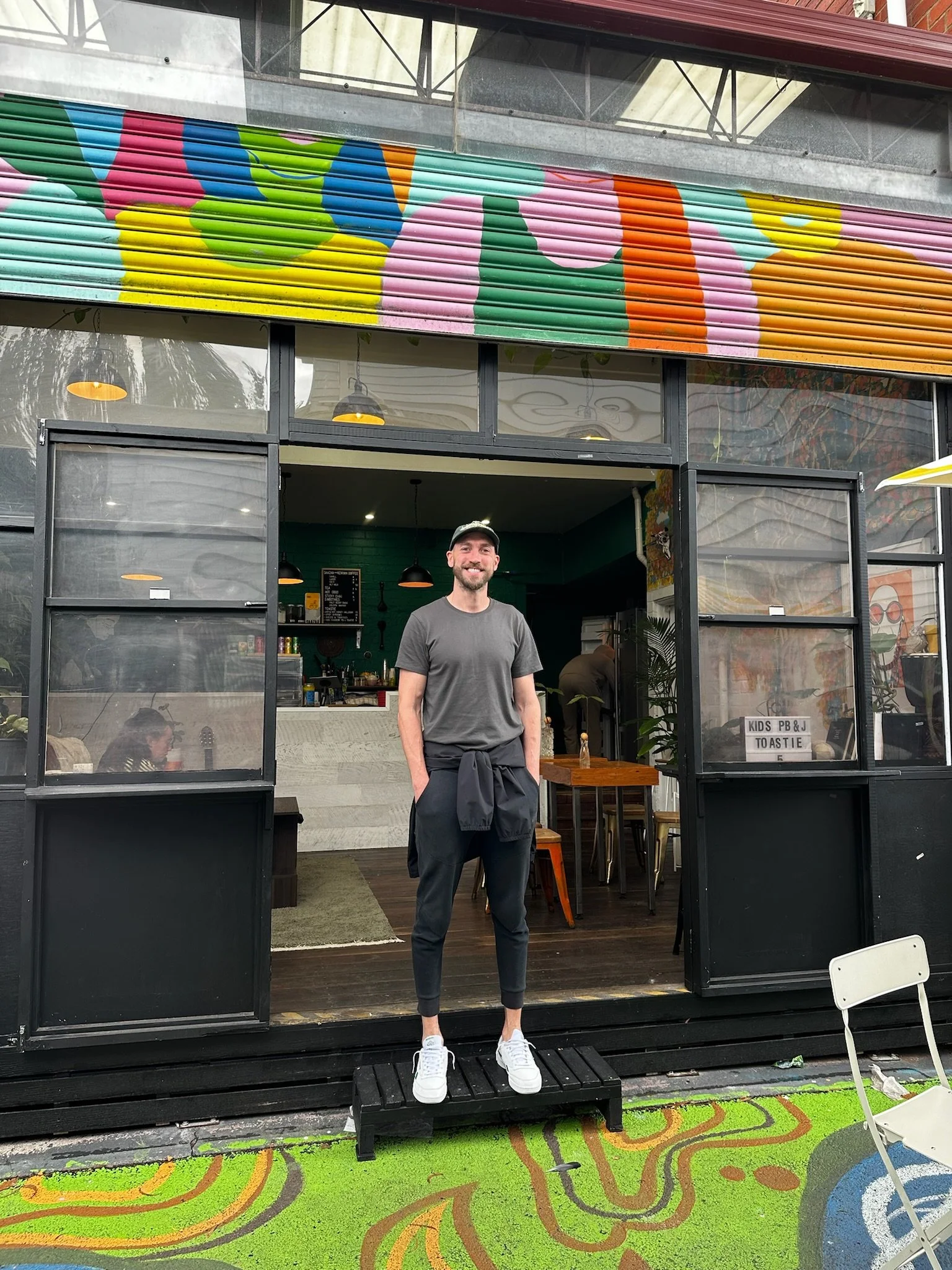
Fun Fact: Paul was a professional basketball player in the UK and Australia. Can you tell?
Paul came into breathwork the way most practitioners do: through survival.
After losing his partner to suicide in 2019 and then living through a Melbourne lockdown with nowhere to put his grief, he tried every traditional route available. None of it reached him. He looked in person and online and found a lot of spiritual language wrapped around very little substance. He got burned. More than once.
What actually helped were coaches and practitioners who had done the real work themselves—but they were barely surviving financially.
Those practitioners had back-to-back sessions, pieced together income across platforms not made for them, and some returned to 9-to-5 jobs because changing lives didn’t pay the rent.
Paul qualified as a breath science practitioner through the School of Breath Science. Working with clients, he saw the problems firsthand: fragmented delivery, administrative burden, disconnected tech, and the sense that business was overtaking practice.
He built the first version of Plaece for his own clients. Then thought: why not share this with everyone doing this work?
Ann: the strategist who stopped climbing
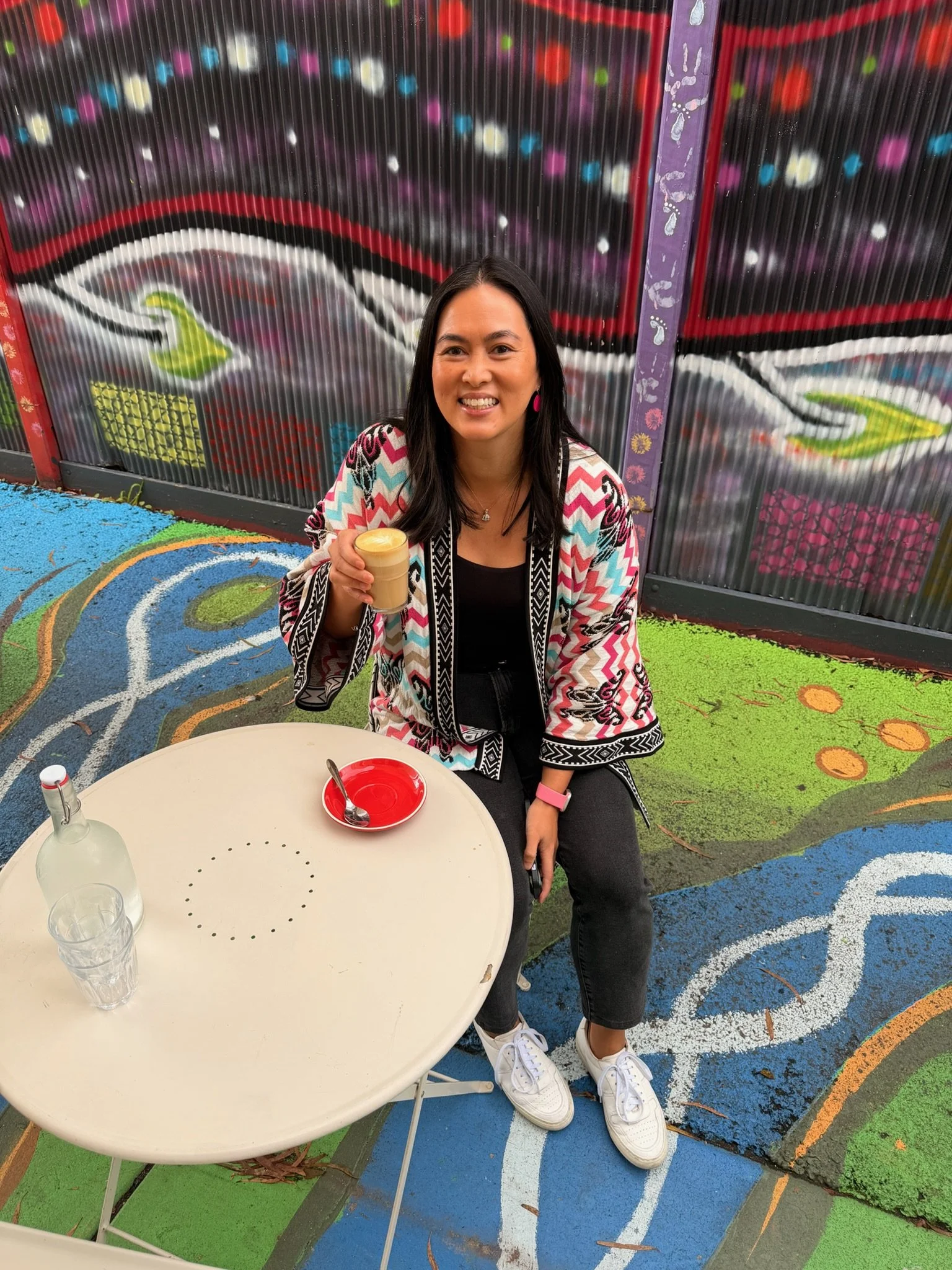
Fun Fact: Ann has a dry sense of humour. She jokes quietly and waits to see who notices.
Ann didn't burn out quietly: cycles of overwhelm and pushing through panic attacks.
Ann spent years in top brand and marketing roles. At 40, what once looked like “success” from the outside gradually meant nothing.
Her parents arrived in Australia as refugees — boat people who came with nothing and built something solid through a small business after many failures. Supporting people who are building something real, on their own terms, is personal for Ann.
After an accident in Thailand, one that put both Ann and Paul in the hospital, it was holistic tools and human support that carried her through recovery. Not the systems or fancy apps. The coaches and facilitators.
Those practitioners oscillated between feast and famine, draining their energy on tech and admin that distracted from the real work. Every week, we hear from someone who moves from practitioner to full-time content creator, not by choice but for survival.
Ann brings the brand and business lens to Plaece: “tech should be a bridge, not a barrier”. If the platform gets in the way of the work, it's the wrong platform.
Cam found us the way many people find Plaece - through resonance.
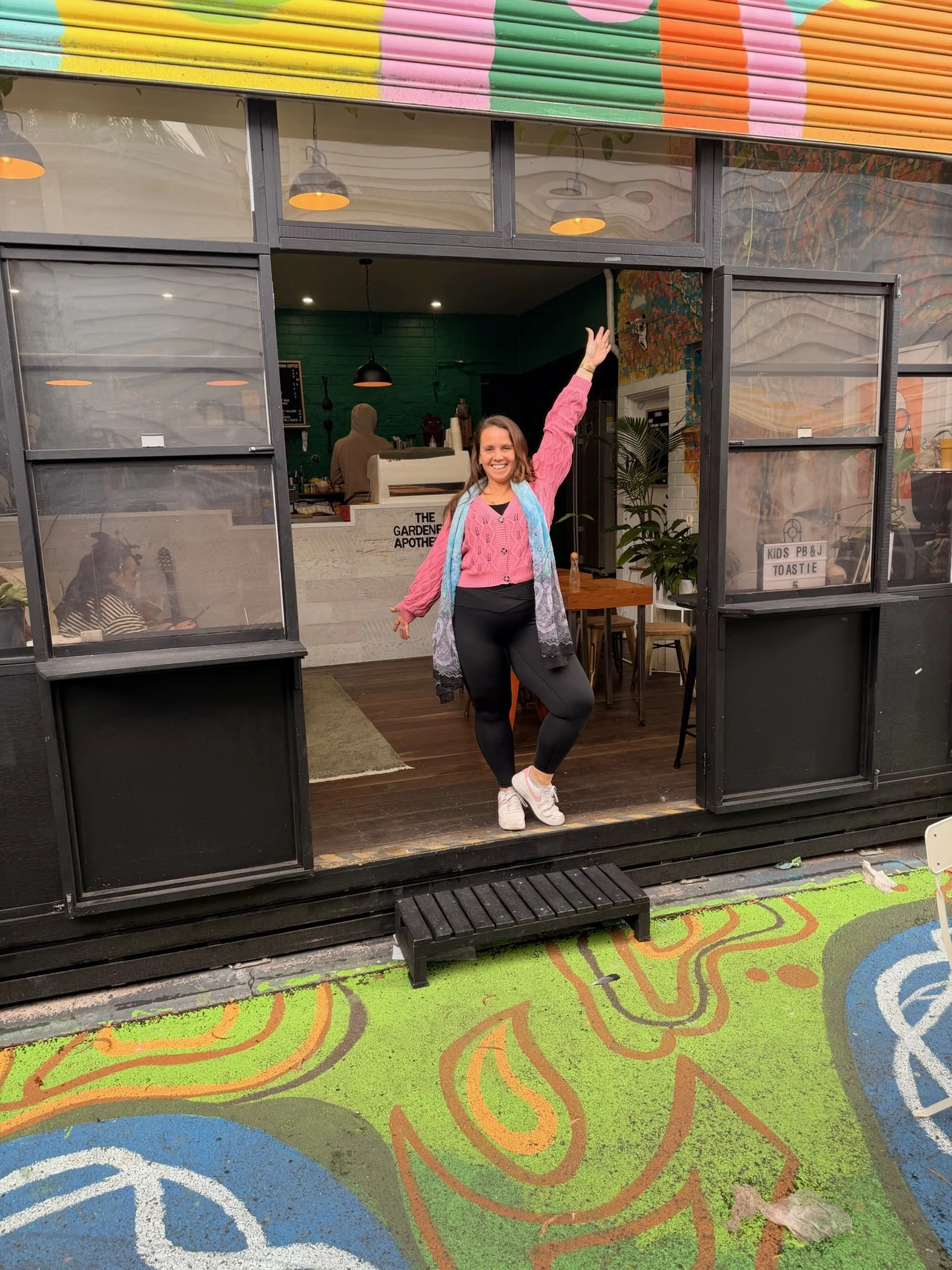
Fun Fact: Cam is an avid Fred Again fan and seen him live 17 times across continents!!
She'd spent a decade in corporate tech sales, chased Australian permanent residency for twelve years, and finally got it in 2024. The moment she'd worked toward for so long arrived, and instead of relief, she felt “Oh. Now what?”
She found breathwork, somatic work, meditation, yoga, and energy practices. Through this, she noticed that practitioners worth working with were nearly impossible to find, buried among louder, less authentic accounts.
The best ones were the hardest to reach.
The three of us found each other in a room of cybersecurity and tech professionals, and for the first time in a long time, she said she didn't feel like the odd one out.
At that moment, we realised the community wasn't something we were simply building. Instead, it was forming organically: centred around honesty, shared experience, and the gap between what the wellness industry promises and what it actually delivers.
Now Cam is part of building Plaece. She’s lived this problem from the seeker’s side, too. How do we ensure practitioners doing real work are visible to those who need them?
The question we keep coming back to
The wellness industry has visibility and sustainability problems, and they're connected.
The practitioners doing the deepest work are often the least visible. They're not optimising for the algorithm. They're focused on the person in front of them. And when the business becomes unsustainable, which it does, at a rate that should concern all of us - they burn out, pivot, or leave.
And then who's there for the next person sitting where Paul was? In the dark, alone, not knowing where to turn.
That question is why we're here. Because the work calls for it. Because sustainability for practitioners means more people get reached. Because the seekers who need real support deserve to find it without wading through noise.
We’re still refining the tech and learning what this community will become.
But we know why it exists. It’s a part of each of our stories.
If any part of this feels familiar — whether you're the one holding space or the one looking for it — we'd love to talk.
- Ann & Paul
FAQs. Things people actually ask us
-
Most wellness practitioners enter the field through their own healing journey, not through a business background. They're skilled at their craft but overwhelmed by the administrative, marketing, and tech demands of running a practice — often piecing together multiple platforms that weren't designed for the depth of their work. The business weight frequently swallows the practice.
-
Plaece is being built by practitioners and people who have been clients of wellness coaches — not by tech founders looking at the wellness industry from the outside. Both co-founders have direct experience of what it means to need holistic support, and what it looks like when the practitioners offering that support can't sustain their businesses. The platform is designed to consolidate tools, simplify delivery, and let coaches focus on impact.
-
A community-first business prioritises belonging and connection alongside content and as part of how healing actually works. For Plaece, this emerged organically: practitioners and seekers finding each other through shared honesty about the difficulty of this work, rather than through a designed community strategy.
And that’s the beatutiful part, that it’s emerging through conversations and the community itself. -
The practitioners doing the most genuine work are often the least visible because they're focused on clients rather than social media optimisation.
Plaece is building a platform to make these practitioners more findable and more financially sustainable, so that people looking for real support can access it without wading through noise.
We honestly know what it’s like to lose trust in the space through our own lived experiences with coaches here in Australia and overseas.
-
Plaece is built for breathwork facilitators, somatic coaches, sound healers, yoga teachers, meditation guides, energy practitioners, and any holistic coach running programs, challenges, group content, or ongoing wellness journeys.
It's particularly suited to practitioners who want to consolidate their tools and build sustainable income without the overhead of custom tech.